E-ISSN : 3123-8947
MAIN MENU
SUBMISSIONS
JOURNAL TEMPLATE
 |
INFORMATIONS
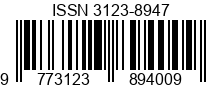
ISSN BARCODE
 |
RECOMMENDED TOOLS:
 |
 |
 |
 |
STATISTIC OF LOGIKA:

NEXCORE: Journal of Computer Science & Intelligent Systems applies a rigorous, objective, transparent, and internationally standardized peer review process to ensure the scientific quality of all published articles.
NEXCORE adopts a:
Double-Blind Peer Review
In this system:
The reviewers do not know the authors' identities
The authors do not know the reviewers' identities
This model ensures objectivity, independence, and prevents conflicts of interest.
Authors submit their manuscripts through the NEXCORE Open Journal Systems (OJS) platform in accordance with the journal template and author guidelines.
The editor conducts an initial assessment focusing on:
Relevance to the journal's aims and scope
Compliance with the journal template and guidelines
Completeness of metadata
Plagiarism screening (using Turnitin/iThenticate)
Manuscripts exceeding the similarity threshold (maximum 20%) will be returned or rejected.
The editor assigns at least two independent reviewers with expertise aligned to the manuscript topic.
Reviewers are selected from:
Academics
Researchers
Professional practitioners
With a minimum qualification of a doctoral degree or a strong publication record in the relevant field.
Reviewers assess the manuscript based on:
Originality and scientific contribution
Relevance to computer science and intelligent systems
Methodological rigor
Clarity of analysis and discussion
Novelty
Quality of references and citations
Reviewers provide recommendations:
Accept
Minor Revision
Major Revision
Reject
The editor makes a decision based on the reviewers' reports, considering:
Consistency of evaluations
Scientific quality
Compliance with publication ethics
The final decision is independent and objective.
Authors must respond to all reviewer comments and submit:
Revised manuscript
Response to reviewers letter
The editor verifies the revised manuscript and issues the final decision:
Accepted
Rejected
Accepted manuscripts undergo:
Copyediting
Proofreading
Layout editing
Prior to official publication.
Average review timeline:
Initial screening: 5–7 working days
Peer review: 2–4 weeks
Author revision: 1–3 weeks
Final decision: 3–5 working days
Estimated total processing time: 4–8 weeks
Reviewers are required to:
Maintain confidentiality
Conduct objective and professional assessments
Avoid conflicts of interest
Provide constructive feedback
All manuscripts are treated as confidential documents and are only accessible to:
Editors
Assigned reviewers
Corresponding authors
In case of significant ?????? of opinion between reviewers, the editor may:
Appoint an additional reviewer
Conduct an independent editorial assessment
The editor’s decision is final.
This peer review process is designed in accordance with international best practices in scholarly publishing and the guidelines of COPE (Committee on Publication Ethics).
E-ISSN : 3123-8947
MAIN MENU
SUBMISSIONS
JOURNAL TEMPLATE
|
INFORMATIONS
ISSN BARCODE
|
RECOMMENDED TOOLS:
|
|
|
|
STATISTIC OF LOGIKA:





Sekretariat:
SORATEKNO PUBLISHER
Jl. Flamboyan 6, Desa Tanjung Sawit Kampar, Riau, Indonesia

This work is licensed under a Creative Commons Attribution-ShareAlike 4.0 International License.
